

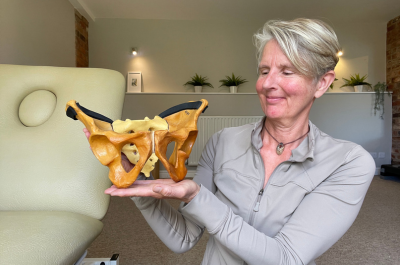
The pelvic floor is an integral part of the body. Optimising how it works involves far more than simply learning to squeeze and release the muscles.
Rachel, from Rachel Kili Physiotherapy runs practical pelvic floor workshops. This is for people suffering with leaking wee, poo or constipation. She believes that the pelvic floor should be considered as part of the wider body, with alignment, movement and breathing all playing a role in how effectively the muscles, joints and organs function.
A key part of her approach is challenging some of the common assumptions around pelvic floor problems. Incontinence and constipation are often attributed simply to getting older or having children, but Rachel says this is an overly simplistic explanation and can prevent people from understanding what may actually be contributing to their symptoms.
Her workshops explore how the pelvic floor naturally engages during everyday activities, as well as how awareness of its purpose can help people better understand and support their bodies.
Rachel also highlights the impact that everyday habits and routines can have on pelvic floor function. Developing greater awareness of these patterns can be an important part of making sustainable changes.
Two practical workshops are taking place later this month:
Monday 21 September – Habberley SY5 3.30–4.15pm
Thursday 24 September – Shrewsbury SY2 3.15–4pm
The sessions will cover how to engage and actively release the pelvic muscles to support bladder and bowel control, alongside movements and exercises aimed at developing strength and reliability. Participants will also look at how to plan practice and measure progress.
The workshops cost £15 and are designed to provide practical information and advice that can be incorporated into everyday life.
Rachel is also open about her own experience, acknowledging that she faces some of the same challenges and understands the effect they can have on confidence and quality of life.
“People are not alone in experiencing problems with their pelvic floor,” is the underlying message of the sessions. While these difficulties are common, Rachel believes they should not simply be accepted as an inevitable part of ageing or having children.
Places on the workshops can be requested by email
Alternatively you can find out more about Rachel here:



Latest News