

Put Down Roots for Spring
By Phil Birtwhistle, Director of Priestgate Landscapes and Horticulture Ltd
If you want to understand your garden a little better this November, take a walk around it just after it has rained. You can learn more in ten minutes than you might on a fine summer afternoon. Look for the patch of lawn that holds water, the pot that sits in a puddle and the spot by the back door where you’d love to see a little colour from the kitchen window.
For gardeners across Shropshire, those observations can help decide which jobs are worth doing before winter sets in.
Give a new hedge a good start
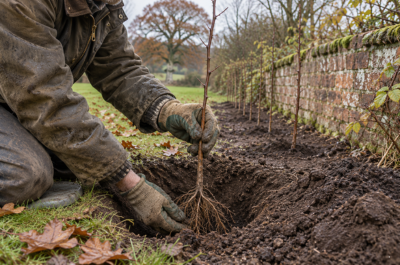
In October we looked ahead to bare-root planting. November is when that preparation can pay off. As deciduous trees and hedging enter dormancy, growers can lift and supply them with the soil removed from their roots. It’s an economical way to plant a length of hedge, especially if you’re starting with young plants that have room to fill out.
Hawthorn and hazel are worth considering for a mixed native boundary where there is space for them to develop. Before ordering, think about the width you can give the mature hedge and how you’ll reach it for trimming. At planting time, keep the roots covered until you’re ready. If the soil is frozen or waterlogged, leave the job for another day.
Plant tulips where you’ll see them
November is a good month to get tulip bulbs into the ground. A single generous pot by the back door can give as much pleasure as a whole border, particularly if it’s in view while you’re waiting for the kettle to boil.
Choose a container with clear drainage holes and plant the bulbs pointed end up, roughly two to three times their own depth. If your borders tend to sit wet over winter, a pot also gives you more control over the growing conditions.
Be selective with the autumn tidy
A rake is useful in November, but where you use it matters. Clear wet leaves from steps and well-used paths, and lift thick layers from the lawn so light can reach the grass. Beneath an established hedge, a scattering of leaves can stay to shelter insects and gradually break down.
The same thinking applies to borders. Cut back stems that have flopped across a path, but take a look from indoors before clearing the rest. A few teasel heads or a clump of upright grasses might be the most interesting thing outside your window on a frosty morning.
Phil’s November checklist
- Plant bare-root trees and hedging when the soil is workable.
- Get tulips into pots or a well-drained border.
- Empty pot saucers outdoors so containers can drain freely.
- Check tree ties for rubbing before winter winds arrive.
- Photograph any persistent puddles while they’re visible.
That last job is easy to overlook. By spring, it can be surprisingly hard to remember exactly where the water stood. A photograph taken on a wet November morning could help you choose the right home for a new tree or save you from putting next year’s path through the muddiest part of the garden.






Latest News